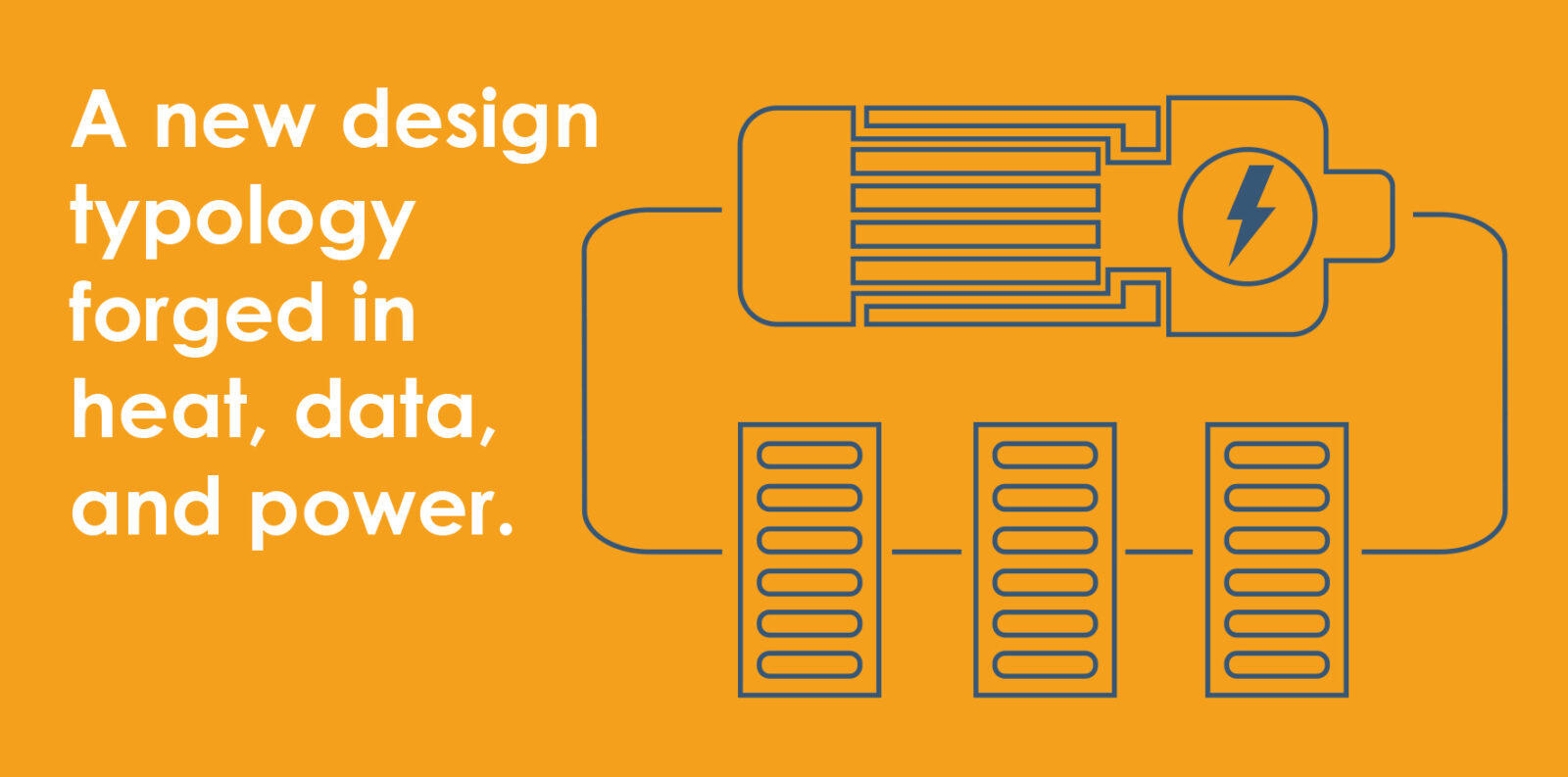
What is the future shape of AI and Data Centres? A new design typology forged in heat, data, and power. 24 Nov 2025
By Orlando Baghaloo
This isn’t another server farm sealed in a grey, windowless box. The architecture of AI is reshaping the built environment, kilowatt by kilowatt, megabyte by megabyte, and now, megawatt by rack.
Forget the legacy “hyperscale” archetype. The modern AI data centre is no longer a neutral container. It’s a high-density, heat-intensive, grid-integrated, water-sensitive, civic-scale utility, a new species of building. And as architects, engineers, and planners we now stand squarely in the hot aisle.
The Thermal Load as Design Generator
AI infrastructure is thermal infrastructure. A recent collaboration with Stantec team showed that a new generation of AI racks routinely draws 40–100 kW per cabinet, with bespoke clusters now approaching 1 MW per rack. These loads have moved far beyond the reach of traditional CRAC-based systems.
Liquid cooling, whether direct-to-chip, cold plate, immersion, or hybrid, is now the design driver. Cooling loops, manifolds, and rear-door heat exchangers aren’t just an MEP challenge; they’re architectural determinants, shaping the building’s grid, structure, and circulation. The cooling topology defines the plan: from the structural floor loading to loop zoning, from liquid containment to thermal segregation.
Cooling is the new circulation while power is the new masterplanner
Power architecture has become the masterplan. With global AI demand projected to exceed 1,000 TWh by 2030, data centres are no longer passive energy consumers, they are active grid-scale participants.
Designers are coordinating earlier than ever with Distribution Network Operators (DNOs) to integrate N+2 redundancy, battery energy storage systems (BESS), and gas turbine or modular nuclear microreactor connections in emerging campus models, sometimes powered by HVO or hydrogen for resilience and decarbonisation.
At studioNWA, architects are reshaping substations, switchgear enclosures, and EMF zoning into a civic expression of power, engineered for safety, designed for clarity, and meant to stand openly in the public realm.
The Water-Energy Nexus (and the PR War)
AI data centres are also water infrastructures. At peak operation, they may demand up to 20–30 million litres of water per day, especially in evaporative or hybrid cooling systems. Cue the public backlash, this is where site-sensitive design matters.
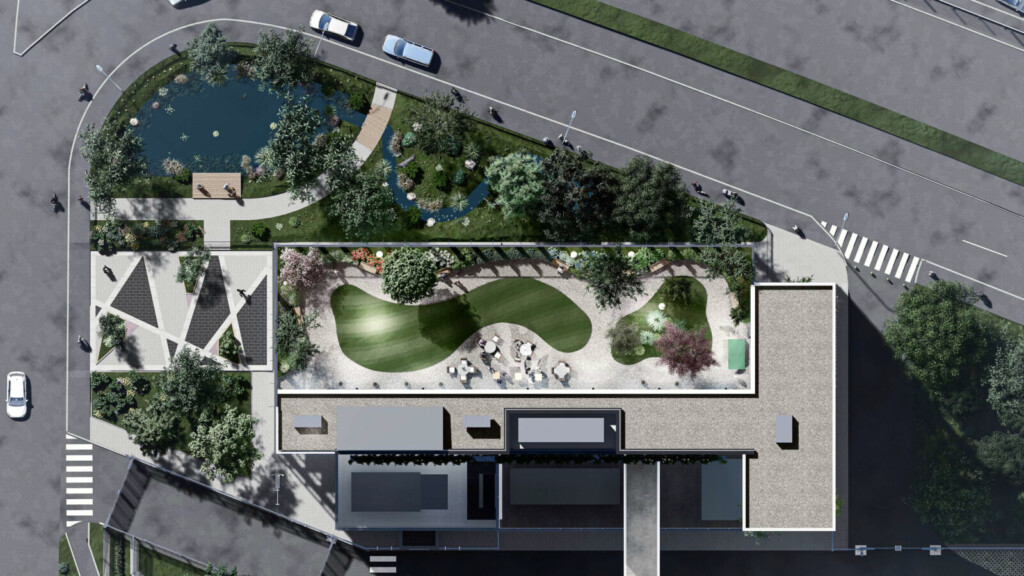
StudioNWA is constantly working with engineers to deploy dry-cooling, rainwater harvesting, thermal buffer tanks, and greywater reuse systems, integrated into landscapes that communicate ecological intelligence.
Water management is no longer hidden in plantrooms, it’s expressed, diagrammed, and negotiated in planning statements and public engagement consultations and materials.
AI as a Spatial Intelligence Tool
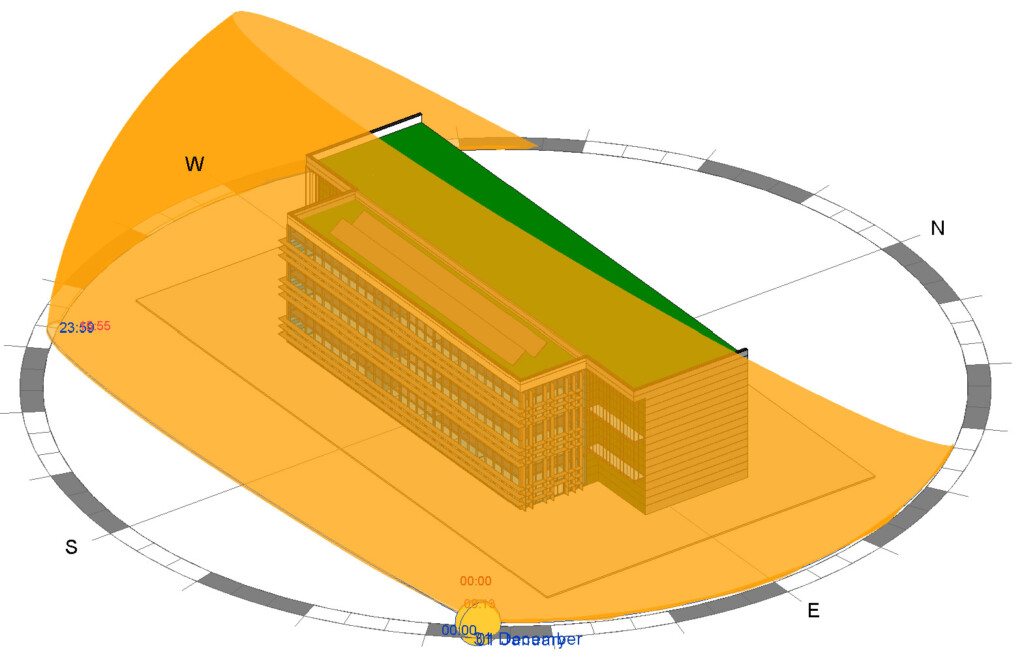
Let’s not forget, AI doesn’t just live in the building, it also helps design them. We’re using machine learning models to simulate airflow, power usage effectiveness (PUE), water usage effectiveness (WUE), and latency distribution from edge deployments. Generative tools optimise rack layouts, cable trays, airflow plenum geometry, even façade shading profiles and articulation with parametric analyses in response to climate data.
In other words: AI is both client and consultant, informing the geometry and thermodynamics of the buildings that sustain it.
So What Is the Shape of the AI Data Centre?
It is a thermal engine in liquid equilibrium.
It is a power spine wrapped in spatial logic.
It is a civic-scaled utility building embedded in the urban grid.
It is a climate-exposed actor with a public face.
And it is increasingly an architectural problem, as much as an engineering one.
This is no longer just about white space and uptime service level agreements (SLA’s). It’s about crafting structures and sculpting buildings that negotiate load, grid, trust, visibility and landscape. It’s about building infrastructure that learns, adapts, and belongs.
For architects bold enough to step into the plantroom, this is your renaissance.
Let the engineers lead the heat maps, but we designers must shape the future form.
As AI defines the future, we decide how it fits in the world.


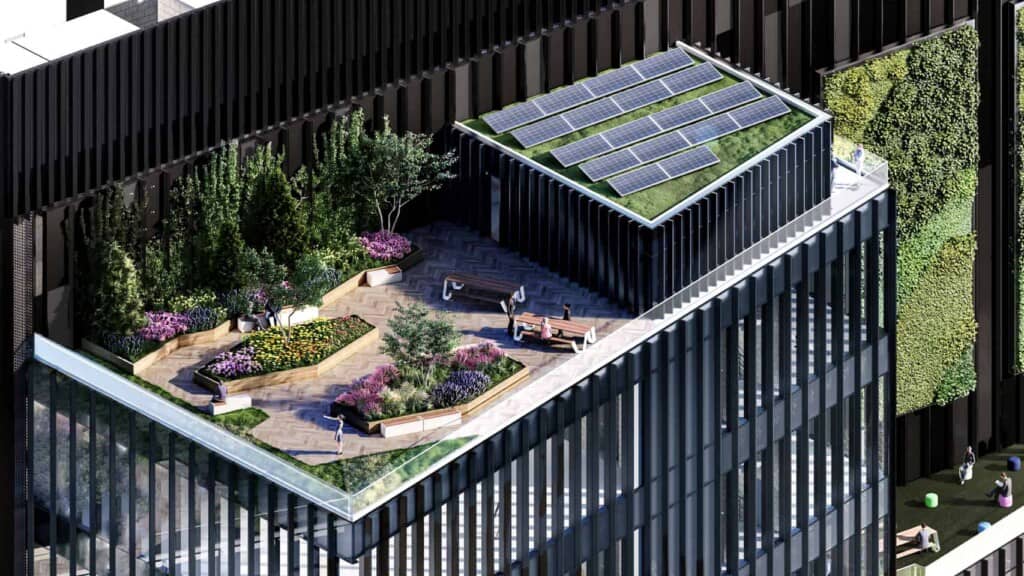
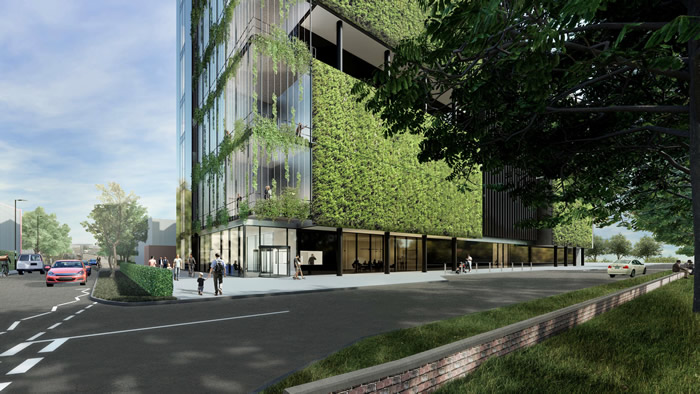







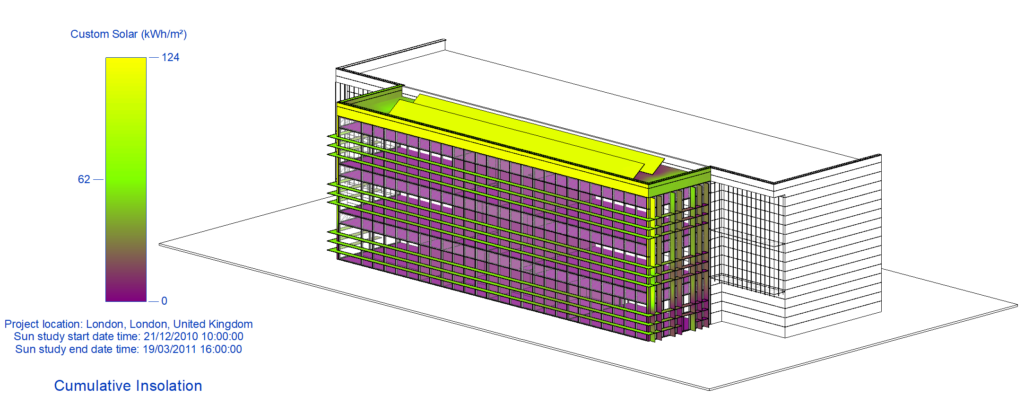 Glazing ratios and solar shading devices designed to suit solar orientation ensure the building façade becomes more resilient to excessive heat gains and losses.