
Let me share a secret with you… 3 Aug 2026
For most architects, the data centre is a ghost industry. It’s either viewed as an impenetrable fortress of pure engineering, an unwelcome blight on the landscape, or simply an uninteresting, windowless grey box.
As emerging design professionals, many architectural graduates look toward residential skyscrapers, cultural hubs, or community pavilions to make their mark. Data centres rarely cross their minds, let alone their drawing boards. We are taught to design for human scale, light, and unity. So, how do we pivot to designing for servers &, cooling stacks?
The barrier isn’t just a lack of interest; it’s a disconnect driven by intense technical gatekeeping and a culture of secrecy.
On 11th June, I attended the GeN+1 Elevate Conference in London, an industry event dedicated to supporting, developing, and welcoming the next generation of professionals into the data centre sector.
Throughout the panels, one message stood out above all others: the industry urgently needs skilled talent. For an architectural outsider, entering this space feels daunting. Compared to traditional sectors, the technical baseline is massive. Yet the conference challenged one of the industry’s biggest misconceptions: you do not need a background in IT to design, invest in, or build a successful career in data centres. Unlike sectors where design methodologies can stagnate or are relatively predictable, data centres demand continuous learning.
The technology evolves at lighting speed, driven by the growth of AI and cloud computing, meaning that everyone in the room, from the interns to the veterans are learning & adapting.
But then why is it so difficult for young architects to break in? This lies with the industry’s obsession with anonymity. During the “Legends” panel, which featured experienced individuals, the discussion turned to public perception. As architects, we are very familiar with NDAs and client confidentiality, but the data centre sector takes this to an extreme. Often, the general public knows exactly who owns a massive new development and what it does. Yet, the architects who designed it are legally gagged from discussing its innovations, sharing case studies, or celebrating their work.
When we can’t see the work, how can we expect young professionals to aspire to create it? This makes it difficult to market the sector as a viable career. The good news is that hyperscalers are beginning to realise that if they want a future workforce, they have to demystify the cloud today.
It was encouraging to hear how companies are now actively engaging in public outreach, even going into primary and secondary schools to teach children about data infrastructure, AI, and where their digital lives actually “live”.
Additionally, RIBA alongside the DSIT have launched the ‘Data Centre Design Challenge’ a competition to allow designers to move away from the standard warehouse-like boxes towards high -quality aesthetics schemes. The goal is to reimagine data centres as critical national infrastructure that delivers genuine civic value and pride.
Hopefully, this will allow Architects to bring human-centric, problem-solving, aesthetic value, and master-planning expertise to the table; the exact skills this sector needs to overcome public resistance and design for a sustainable future. If the data centre industry truly wants to elevate its next generation of talent, it must open its doors, loosen the NDAs just enough to let design innovation shine, and invite architects to the drawing board. After all, we aren’t just designing boxes for servers; we are designing the physical infrastructure of the future.


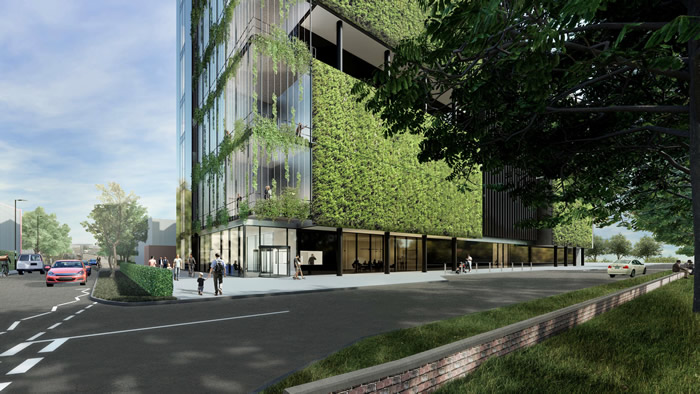







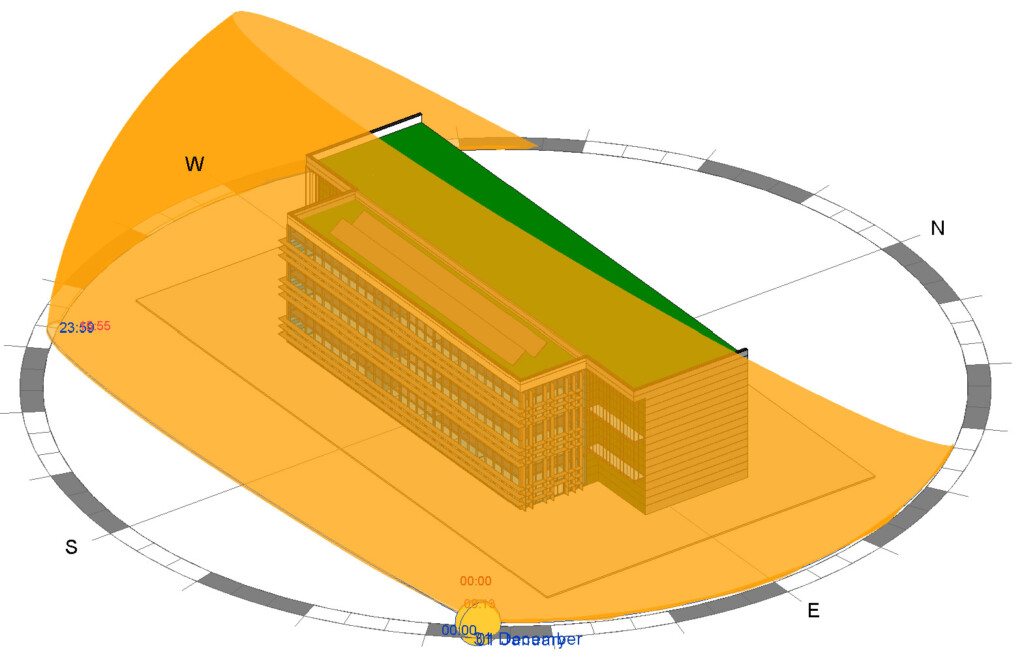
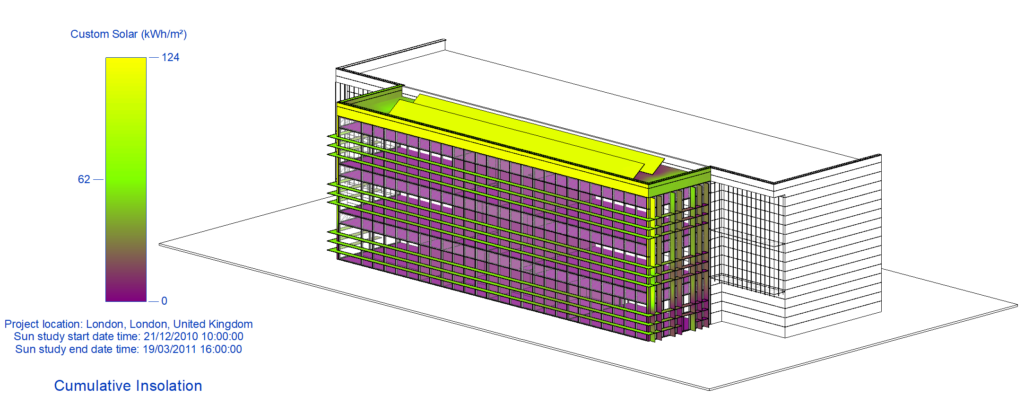 Glazing ratios and solar shading devices designed to suit solar orientation ensure the building façade becomes more resilient to excessive heat gains and losses.